
The body creates more than 100 hormones to carry out all kinds of functions, including:
- Electrolyte and fluid balance between cells
- Metabolism and energy
- Circadian rhythm
- Immune system
- Growth and development
- Governing the reproductive system
I once had a nutrition teacher say, “You experience life through your hormones,” because they profoundly affect your outlook, mood, energy, and so much more. Hormone function has been compared to an orchestra- the leading glands responsible for hormone secretion are like the conductor and the hormones are the instruments. They all need to play together to create the rhythm of life. A dysfunctional instrument or conductor can throw everything off, and diet and lifestyle choices are huge contributors to an out-of-tune ensemble.
This post will focus on three key hormones involved in the female reproductive system: estrogen, progesterone, and testosterone. You’ll learn the symptoms of hormone imbalance and the 5 steps to bringing your hormones back into balance, naturally.
List of Hormone Imbalance Symptoms
There are a plethora of symptoms that express from hormone imbalance and as you read through this list, you’ll realize that there is a lot of crossover. Because of this, it’s easier to focus on balancing the hormones as a whole as opposed to hyper-targeting specific symptoms and then working to increase or decrease one hormone over the other. When I thought about how to best share this information, I decided there is value in sharing symptoms as they relate a specific hormone. So I’ve listed them all out here for reference and put red flags (🚩) next to key symptoms to watch out for. These are clear indicators that your hormonal orchestra needs a tune-up!
Something to keep in mind: A key function of progesterone is to keep estrogen in balance. So if you’re seeing symptoms of one or the other, it’s likely an imbalance of both.
Signs of low estrogen:
- 🚩 Tender breasts
- 🚩 Irregular or missed periods
- 🚩 Painful sex
- Mood swings, irritability
- Night sweats
- Hot flashes
- Sleep issues
- Dry skin
- Dry vag
- Brittle hair/hair changes
- Weight gain
- Brain fog
Signs of high estrogen:
- 🚩 Heavy or light periods
- 🚩 Fibroids in uterus
- 🚩 Worse PMS than usual
- 🚩 Irregular periods
- Fatigue
- Weight gain around waist and hips
- Irritability, fatigue, depression
- Low mood, anxiety
- Low sex drive
Signs of low progesterone:
- 🚩 Short cycles, irregular/missed periods
- 🚩 Difficulty conceiving
- 🚩 Tender breasts
- 🚩 Spotting between periods
- 🚩 Pregnancy complications
- Hot flashes
- Headaches
- Sleep issues
- Irritable, anxious, tired, depressed
- Bloating, weight gain
- Decreased sex drive
Signs of high progesterone:
Same as above, plus:
- Water retention
- Waking up groggy/tired
Signs of low testosterone:
- 🚩 Persistent fatigue
- 🚩 Irregular periods
- Reduced bone strength
- Decreased libido
Signs of high testosterone:
🚩 4-7% of women experience this and some have patterns of symptoms called PCOS (Polycystic Ovarian Syndrome) which can lead to infertility and other problems. Some symptoms include:
- Excessive hair growth
- Acne
- Excess perspiration
- Frontal balding
- Deepening of the voice
- Irregular, missed periods
- Enlarged clitoris
5 Steps to Balancing Your Hormones Naturally
Before you jump to the conclusion that you need hormone replacement therapy, know that you can take foundational steps to bring balance to your hormones. If you start hypertargeting your hormones without understanding how to foundationally support your body, you will likely end up back where you started.
If you read through the symptoms above and are experiencing a high number of them, specifically the red flag items, take a deep breath and understand that you can holistically support your system!
Here are 5 steps to balancing your hormones naturally…
Step 1: Balance your Blood Sugar
This is a direct quote from my Nutritional Therapy training notes: “Any attempt to normalize hormonal imbalances is futile until blood sugar issues are addressed.” The endocrine system, aka the glands and organs involved in hormone secretion, are integrated with and in fact, share, organs and hormones that are involved in the blood sugar system.
When looking at your health foundationally from a holistic perspective, the blood sugar system is considered the top of the cascade of endocrine offenders. This is because imbalanced blood sugar is a huge stressor on the body. It leads to chronically high cortisol which in turn leads to imbalances such as estrogen dominance, abnormal progesterone and estrogen ratios, and adrenal fatigue or exhaustion.
If you regularly feel fatigued, shaky/hangry/headaches between meals, tired but wired, irritable, have trouble getting to sleep or wake up in the middle of the night and can’t get back to sleep, crave sweets, feel sleepy in the afternoon, or experience frequent thirst or frequent urination – your blood sugar is compromised. Nearly all of my clients have had a blood sugar imbalance!
The good news is that blood sugar balance can be quick to improve with a few dietary and lifestyle changes.
Action steps to implement immediately to balance blood sugar:
- Eliminate processed foods that contain ingredients like enriched flours, seed oils like sunflower, corn, cottonseed, safflower, or grapeseed, high amounts of sugar, or incredibly long ingredients lists with a bunch of words you don’t understand. Real food includes few, real ingredients. You should be able to read your labels. If you can’t, fuck that shit. It’s not food.
- Eat a breakfast high in protein within an hour or two of waking.
- Eat at consistent times each days
- Macro balance all your meals (include protein, healthy fats, and complex carbs). Don’t snack on pure carbs!
- Manage your stress
- Have a consistent exercise or movement routine
I HIGHLY RECOMMEND you implement all of the above to not only balance blood sugar, but to set a solid foundation for your overall health. Without these basics, your overall health will continue to suffer. These are the KEYS to health! And you’ve heard it a million times, right? That’s because it’s true and so many people want to skip right over it and spend hundreds of dollars taking vitamins and supplements instead. 🙄
Step 2: Balance your Digestion and Gut Health
If we’re going to nutritionally support your hormones, you have to be able to digest and assimilate the nutrients. Optimizing your diet to optimize your hormones without first making sure you can effectively digest and eliminate is a waste of time. Additionally, estrogen can be reabsorbed into the gut if it isn’t properly eliminated.
If you experience symptoms such as reflux, heartburn, bloating, feeling really full after meals, feeling sleepy after meals, stomach pains or cramps, diarrhea, undigested food in stool, food sensitivities, allergies, hives, feeling spacey or unreal, bizarre/vivid/nightmarish dreams, bad breath, constipation, IBS, or really smelly farts – your overall digestion and gut health could use support.
Most of my clients’ digestive issues stem from 3 things:
- Inefficient stomach acid production
- Enzyme insufficiency
- Liver or gallbladder insufficiency
Action steps to support digestion and gut health include:
- Eat breakfast
- Hydrate – drink half your body weight in ounces of pure water each day (so if you weight 200 pounds, drink 100 oz of water)
- Adopt a whole foods, nutrient-dense diet
- Drink warm water with lemon before meals to stimulate stomach acid production and prep the body for digestion
- Bitters before meals such as an arugula salad or digestive bitters spray can also stimulate stomach acid production
- Supplemental enzymes can go a long way to help you digest your food. Here is a gentle supplement I typically recommend.
We’ll talk about the liver in the next step…
Step 3: Support Your Detox System
Supporting your detoxification system is key in balancing your hormones for 3 reasons:
- Your liver plays a big role in ability to digest fats, and you need your fats to have a healthy menstrual cycle
- Your liver is key to detox and is bombarded with endocrine disruptors such as synthetic xenoestrogens like BPA, phthalates, and pesticides commonly found in food, soaps, beauty, and cleaning products
- Your liver is responsible for breaking down and removing used hormones from the body – if you have high estrogen symptoms it is likely because your body has a buildup of used estrogen and is having trouble metabolizing it for elimination
So yeah, you want to support your liver and detox systems!
Symptoms of a sluggish detox system include nausea, stomach upset from greasy foods, dry skin, regularly consuming alcohol, chronic fatigue, greasy/shiny stools, feeling easily intoxicated and/or hungover from drinking wine, and a sensitivity to smoke or perfume or cleaning agents.
To truly support your liver and detox systems, implement the following action steps:
- Hydrate! Drink half your body weight in ounces of pure water each day (so if you weight 200 pounds, drink 100 oz of water).
- Seriously limit your alcohol consumption. If you drink 1-2 drinks everyday your liver is nearly constantly dealing with metabolizing that alcohol and doesn’t have much energy to do anything else.
- Nutrients that the liver loves include: dark leafy green vegetables, beets, fiber, green juice, dandelion tea, lemon juice and hot water.
- Herbs like milk thistle are great for the liver. This blend is a great support for the liver. It’s important to note that if you aren’t regularly having smooth bowel movements, a liver supplement might not be for you. You have to be able to poop out toxins so see Step 3 if you’re not doing that on the regs.
Step 4: Track Your Cycle for 3 Months
If you haven’t really taken the time to track your cycle’s symptoms, your mood and energy levels, what type of work you enjoy during different phases, and what type of foods you’re craving, do it! It is an eye-opening experience and can help you understand which hormone imbalances you’re dealing with. Additionally, it can be a game changer in planning your life!
There are a plethora of period tracker journals on Amazon, but a lot of them just track menstruation and ignore the other phases of your cycle. It’s also just another thing to keep up with and unless you’re super dedicated, it will be difficult to stay on track with your tracking.
That’s why I recommend to instead use a daily planner. I use this planner/journal and simply add which day of my cycle I’m on next to the date. I take note of any symptoms, what type of work is coming easy to me, and what type of movement is feeling really natural. Other than jotting a few quick notes, I use it as a normal planner to help plan my day.
Once you do this for a few months, you’ll have a newfound awareness into how your body manages its cycle. It is a powerful tool to help you tap into not only your health, but how you show up and deliver the best results for work, exercise, and even in your relationships. You’re more social and open at different points of your cycle and when you know how to optimize that, flowing through life is much more fun! More importantly, your symptoms can help you get a better picture of which hormones or systems might need support. This is because your hormone levels increase or decrease based on your cycle. Whereas men cycle through their hormones every 24 hours, women cycle every 28-ish days.
Here’s a quick snapshot of what hormones are at play at which points during your cycle:
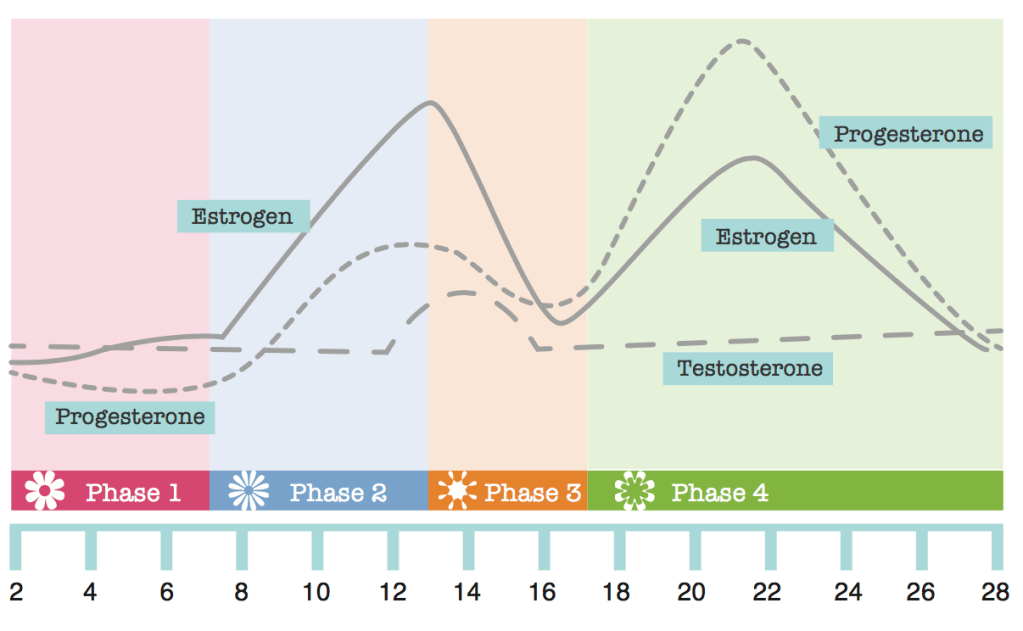
Phase 1 = Menstruation, aka your period (aka known as “early follicular”)
Phase 2 = Late Follicular
Phase 3 = Ovulation
Phase 4 = Luteal (sometimes this is broken down into 2 parts: mid-luteal, and late luteal)
I will eventually do a whole post on this and link to it here, but for now… let’s get back to the 5 steps to balancing your hormones naturally!
Step 5: Cycle Sync Your Nutrients
Depending on what you uncovered during your tracking, you will benefit from certain nutrients at various stages of your cycle to support hormone balance. Well, you’ll benefit either way but it can help to focus on whatever you’ve uncovered.
For example, if you notice your breasts feel tender during your late follicular phase, you’re likely experiencing a symptom of excess estrogen since it’s naturally on the rise during this time. This is an indicator that your detox systems could use some support so that you can effectively move used up estrogen out of the body.
Below is a list of helpful nutrients broken out by each phase. These nutrients will help support estrogen and progesterone levels, as well as support your liver so you can move out excess estrogen.
🩸 Nutrients to fill up on during Menstruation
Iron -> Red meat, leafy greens, legumes, lentils
Vitamin C -> Oranges, grapefruit, berries, broccoli, brussels sprouts, cabbage, cauliflower, spinach, watermelon
Magnesium -> Leafy greens, veggies, nuts & seeds
Omega 3s -> Salmon, sardines, flaxseeds, walnuts
Herbal teas -> Nettle, Holy Basil, Red Raspberry Leaf
Zinc -> Oysters, red meat beans, nuts, pumpkin seeds
B6 -> Wild-caught tuna, bananas, grass-fed & finished beef, pasture-raised chicken, sweet potato, salmon
Fiber -> Green peas, split peas, lentils, black beans, white beans, chia seeds, raspberries
Easy to digest, nourishing, warm foods
🔃 Nutrients to fill up on during Late Follicular
Choline -> Egg yolks, liver/organ meats, seafood, cruciferous vegetables, whole grains, nuts and seeds
Zinc & Selenium -> Cashews, Brazil nuts
Vitamin A -> Sweet potato, carrots, leafy greens
Vitamin D -> Sunlight, salmon, tuna, mushrooms
Omega 3s -> Flaxseed, algae, oily fish like salmon, sardines, anchovies, mackerel, and herring
Fiber -> Baked beans, lima beans, artichoke, prunes, raspberries, pineapple, apple, blueberries, pumpkin
Sulforaphanes -> Broccoli, brussels sprouts, kohlrabi, kale, cauliflower
Fermented foods -> Kimchi, sauerkraut, pickled veggies
Herbal teas like Schisandra berry and green tea, and herbal blends with Milk Thistle, Artichoke, and Dandelion
Antioxidants -> Bright fruits and veggies, berries, artichokes, and green tea
🥚 Nutrients to fill up on during Ovulation
Vitamin E -> Wild salmon, free-range chicken, sweet potato, avocado, jackfruit
Zinc -> Oysters, free-range organic red meat, mussels, clams, pumpkin seeds
Shatavari and Maca Powder
Red Clover tea
🌖 Nutrients to fill up on during Luteal
B6 -> Wild-caught tuna, bananas, grass-fed & finished beef, free-range chicken, spinach, sweet potato, salmon, garlic
Herbal teas like Chaste Tree berry, Ginger, Burdock Root, or Holy Basil
Calcium -> Milk, cottage cheese, sour cream, arugula, yogurt, hard cheeses, broccoli, tofu, cooked amaranth
Complex carbs -> Whole grains (NOT “enriched”), lentils, legumes, veggies, brown rice, beans, oats
Protein -> Beef, chicken, bison, tofu, tempeh, salmon, eggs, mozzarella, cottage cheese, pork
Omega 3s -> Salmon, sardines, flaxseeds, walnuts
By really honing in on specific nutrients throughout your cycle, you can optimize your hormone levels and get more in tune with your needs.

I hope you found this information useful and that you’ll use it to help support your hormones. Comment or email me with any questions!
⚖️ Good luck!

 Your Traveling NTP
Leave a reply to How to Fight Perimenopause Symptoms – Your Traveling NTP Cancel reply