
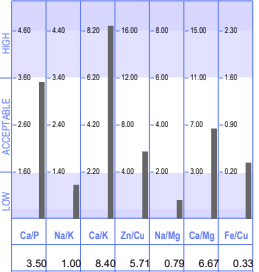
Hair Tissue Mineral Analysis is a cost-effective, non-invasive screening test where clients provide a hair sample to be sent to a lab to test the mineral content.
Mineral Balance is considered one of the 5 foundations of health according to NTPs. Minerals are considered the “spark plugs” of the body because they are key in cellular health. They are required for thousands of enzyme reactions for every system in the body! They help contract and relax muscles, they facilitate the transfer of nutrients across cell membranes (nothing gets in or out of the cell without minerals!), they’re important for nerve conduction, and lots more. They can ONLY be obtained from food so balancing your mineral levels and mineral ratios is a crucial, and often overlooked, piece of data that can help improve your overall health.
DISCLAIMER: Do not read this article and begin taking one-off mineral supplements based on your symptoms. Minerals are antagonistic, meaning they affect the absorption of other minerals. For example, if you feel you have low calcium and you start supplementing with calcium, your magnesium levels will decline because calcium can deplete magnesium. Minerals are extremely complex and this is why working with a practitioner is so important and worth the investment. Balance is important, it’s not always increasing levels of one-off minerals.
What can you find out from an HTMA test?
Mineral ratios are important for balancing body systems and addressing energy, hormone imbalance, and nutrition needs. We can learn about your health and well-being when we look through the lens of HTMA. Here are some key findings an HTMA provides:
Metabolic Type and Nervous System State
One of the most important pieces of information we get from an HTMA is your metabolic type, which also allows us to better understand your nervous system. Metabolic Types range from Slow 1 – Fast 4, with slower types typically in a parasympathetic-dominant state, and fast types typically in a sympathetic-dominant state.
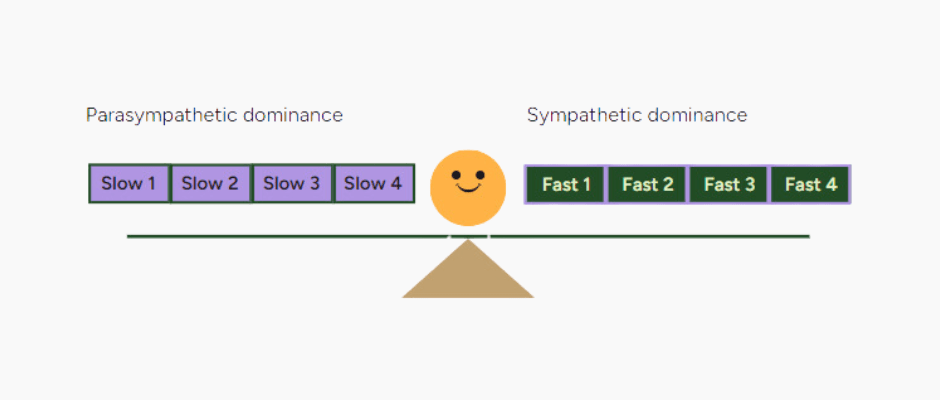
As you can see from the above image, types land on a spectrum with the more balanced types usually falling in the Slow 4 or Fast 1 range. A slow or fast metabolism can also be indicative of your nervous system state. A common misconception about the nervous system is that people tend to think that being parasympathetic-dominant is a good thing, but someone who is in an extreme state of parasympathetic-dominance will have just as many health issues as someone who is on the other end of the spectrum. An extreme state of parasympathetic-dominance leads to symptoms like fatigue, depression or sometimes anxiety, dry skin, constipation, apathy, weight gain, and sluggish or overactive adrenals and/or thyroid. This is because your body is unable to keep up with everyday demands. Being able to move between nervous states when needed is an indicator of good health. Remaining in either state for too long lends itself to a lot of uncomfortable symptoms and eventually, consequences like diabetes, high/low blood pressure, and other health conditions. Sympathetic-dominant individuals tend to have high or imbalanced cortisol, feel nervous or irritable, experience anxiety, digestive issues, oily skin, digestive issues, and sluggish or overactive adrenals and/or thyroid.
Having this information allows me to make specific and targeted recommendations on exactly what nutrients and macro ratios a client should be eating. Slow types need to speed up their metabolism and focus on protein and complex carbohydrates while Fast types need to slow their metabolism down and focus on healthy fats.
Stress levels
According to the father of stress research, Dr. Hans Selye, there are three stages of stress: Alarm, Resistance, and Chronic (exhaustion). These stages describe the body’s physiological reactions to stress. Within each stage, the body attempts to maintain homeostasis. If the body cannot reach homeostasis, the stress is too overwhelming and is considered chronic. A hair test will look at your mineral ratios and levels to determine which stage you’re in.
- Alarm: In an alarm stage, calcium and magnesium are excreted to initiate fight or flight response. If you’re in an alarm state, your body is reacting to acute stress. Together we can discuss what this stress might be and determine a helpful course of action.
- Resistance: The stress response is sustained in this stage. The adaptations the body makes to survive sustained stress can be tolerated for a period of time. The length of time and the specific ways someone maintains this resistance stage varies due to factors such as previous experience, age, sleep cycles, nutrition, and more. Your sodium levels begin to decline, along with adrenal output and you’re generally less able to actively fight stress when you’re in the resistance stage.
- Chronic/Exhaustion: This is the point at which your body can no longer maintain a fight or flight response. You feel exhausted and unable to keep up with life’s demands. This can look like being “stuck” in a sympathetic state, where you’re chronically trying to rise to demands by borrowing resources. Symptoms of sympathetic-dominance include excessive activity, taking on too much, overanalyzing, worry, fear, anxiety, and ultimately, nutritional depletion because you don’t spend enough time in parasympathetic to rebuild your body. On the flipside, it may look like being “stuck” in a parasympathetic state, which leads to a super slow metabolism, feeling depressed or apathetic, exhausted, having little to no motivation, feelings of frustration, and exhaustion. This leads to vulnerabilities or even disease states.
Most of my clients are in the Resistance or Chronic stage of stress. They experience a lot of symptoms due to this borrowing of resources and depletion. Common complaints from clients are digestive issues like constipation, diarrhea, stomach cramps, bloating, and reflux; inconsistent energy issues like waking up groggy, not being able to sleep, feeling extremely sleepy or overwhelmed, and more.
Thyroid health
An HTMA test looks at your calcium and potassium levels to determine if your thyroid is sluggish or overactive. Thyroid hormone controls calcium in the body and calcium affects cell permeability. Remember that minerals are sort of like the gatekeepers to cellular health because they ensure that nutrients and hormones actually make their way into a cell. Potassium affects the production of thyroid hormones.
Your thyroid hormones control your metabolism, muscle strength, fertility, and more. It is paramount that it functions properly AND that the hormones it produces actually make their way into your cells at an optimal rate.
Excessive thyroid activity occurs when hormone uptake is too rapid because your cells are too permeable. Sluggish thyroid activity is due to too much biounavailable calcium in the tissues which makes it difficult for thyroid hormones to get in the cell. This is why you may have normal levels of thyroid hormones on a blood test yet still experience thyroid-related symptoms like weight gain, fatigue, dry skin/hair, constipation. This is very common among my clients.
Dietary and lifestyle recommendations based on HTMA results can have a profound impact on your thyroid health.
Adrenal health
Sodium and magnesium levels are assessed to determine overall adrenal health. Sodium levels correlate to aldosterone, an adrenal hormone that helps regulate blood pressure by balancing levels of sodium and potassium in the blood. It does this by signaling the kidneys to retain sodium and excrete potassium. When aldosterone is produced, the pituitary secretes ACTH (adrenocorticotropic hormone) to regulate production. ACTH also releases cortisol. Magnesium helps regulate cortisol levels by helping to control signals from the pituitary (and hypothalamus and adrenals) and can reduce the release ACTH.
If that’s confusing (it is), let me simplify: The ratio of sodium to magnesium can tell us whether your adrenals are overactive or sluggish.
Symptoms of an overactive adrenal gland include aggressiveness, impulsiveness, diabetes, hypertension, tendency to inflammation and inflammatory reactions, and more. A sluggish adrenal gland leads to fatigue, diminished stamina, depression, weight fluctuations, poor digestion, and more.
Your stress ratio and blood sugar ratio will also give insight into your adrenal health because the adrenal glands are heavily involved in both of these systems.
Blood Sugar
Your calcium to magnesium levels can be very telling of the health of your blood sugar system. Calcium is required to release insulin from the pancreas, which helps bring blood sugar levels down if they get too high. Magnesium inhibits insulin release. Furthermore, too much calcium can interfere with magnesium absorption and vice-versa. The balance of these two minerals is crucial here. If one is too high or too low, it’s affecting the other and all of their functions.
If this ratio is high or low, it’s associated with symptoms like imbalanced glucose metabolism, constipation, muscle aches and pains, muscle twitches and spasms, sugar cravings, and more. If you’re experiencing symptoms like shakiness/hangriness between meals, headaches, waking up in the night and not being able to get back to sleep, or frequent urination or thirst, your blood sugar system is compromised.
Hormonal
Zinc roughly correlates with progesterone in women and testosterone in men. Copper roughly correlates with estrogen in men and women.
I typically do not make recommendations based on this ratio until we’ve assessed other ratios because your thyroid and adrenal gland health can have a profound effect on your hormone levels. So it’s important we start there and then dive into Zinc to Copper ratios on a retest. This ratio is complex and another great example of why it’s best to work with a practitioner to bring balance.
How can I use an HTMA test to improve my health?
Knowing all of the above can bring balance to key systems of the body that have a major impact on your overall health. Balance within these systems can relieve common symptoms like fatigue, constipation, cramping, diarrhea, nausea, reflux, bloating, weight gain, headaches, sleep issues, anxiety, depression, overwhelm from stress, inflammation, hormone issues, detox issues, and more.
I began integrating HTMA into my practice to provide objective and hard data in addition to the subjective data gathered from other intake assessments. It gives clients something more tangible, both initially and on retests. They can clearly see improvements using before and after charts.
The HTMA also allows me to make more targeted dietary recommendations since it provides me with a client’s metabolic profile. Using the HTMA, clients are able to hone in on which macro ratios and nutrients would be the most beneficial for them.


Leave a Reply