
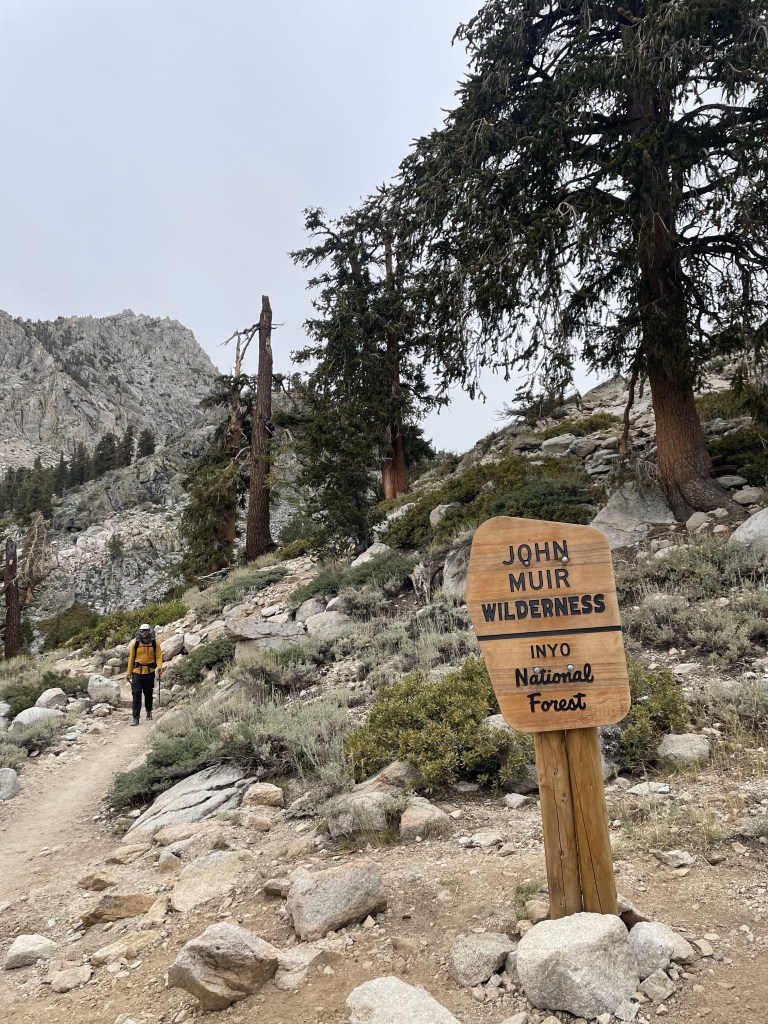
If you’ve been following me on Instagram, you’ve heard me talking about my most recent adventure, thru-hiking the John Muir Trail (JMT) in California. My husband and I spent the 23 days between July 29 – August 19, 2024, backpacking through 240+ miles of Sierra Nevada mountains. As you can imagine, it was a life-changing experience. In the months leading up to the trip, we were anxious about getting it all together: the gear, our physical condition, the food, the route, and more. There was so much to plan, and it was all worth it to feel so much peace in the vast landscape of the Sierras while simultaneously overcoming the physical challenges of the trail.
There are plenty of resources available about planning the trip as far as permits, where to fly into, etc., and I’ll list those at the end. My aim with this article is to write about the experience through the lens of holistic health and provide details about our nutritional approach to the trip, as well as how we prepared ourselves physically and physiologically. Additionally, I’ll highlight the benefits of such an adventure – from its profound effects on grounding to circadian rhythms, and for your nervous system.

So, let’s start by defining the term, thru-hike: A thru-hike is a long-distance backpacking trip that involves hiking an established trail from start to finish. The JMT is a 211-mile section of the Pacific Crest Trail (PCT). The PCT runs from the Southernmost end of California all the way up to British Columbia, Canada, and is 2,650 miles long. Most people do the PCT in sections over the course of their lives, but some badasses do it in one go, which is very tough due to seasonality alone. Other popular thru-hikes include the Appalachian Trail (AT), and the Continental Divide Trail (CDT).
Our specific JMT route ended up being 240+ miles due to the permit we were able to secure. We hiked the trail Northbound (NOBO), starting at Cottonwood Lakes in Inyo National Forest and ending in Happy Isles in Yosemite. I’ve listed some resources toward the end of this article to help anyone with logistics. You’re also welcome to DM me on IG, or email me at jamie@yourtravelingntp.com. I love talking about it and am happy to help!
But, back to the goals of this post…

How we got in shape, beyond just the physical
A hike of this caliber requires more than a physically fit body, you also need to have a strong mental fortitude and be in good physiological health.
💪 Physically, I prepared my body through a mix of weekly activities that included taking 2-3 Bikram yoga classes, 1-2 strength training sessions, one mobility class, and one hike (with a 30-pound backpack). The reason for this varied approach had more to do with what I have access to than it had to do with it actually being the ideal way to prepare. Since I am a yoga teacher, I have access to an awesome studio with diverse classes like Bikram, mobility, and strength. Most of our prepping was in the hotter months and most of the Texas landscape is flat, so it didn’t make much sense to simply hike 4-5x a week. The hikes here are more like easy walks, and it gets extremely hot and humid. Honestly, in the final 2 months before the trip, the one hike a week we were taking was so brutally hot that I was ready to throw in the towel.
My husband’s approach was similar except he did less yoga and instead went running and climbing each week.
Backpacking rough terrain with elevation gain is the ideal way to prepare, but we just didn’t have that access here in Texas. Since both of us have had regular and consistent fitness routines for several years now, we weren’t too worried about physically meeting the demands of the trail. Now that we’ve completed it, I can say this was a fair assessment. Neither of us had trouble keeping up with the mileage and we didn’t get any injuries either!
🧠 As for building up a strong mental fortitude, Bikram yoga is key for me. There are many other ways to build up this type of strength but this is what has been the most beneficial for me. I’ve been consistently practicing this style of yoga for almost 3 years and it has had a profound effect on my nervous system and ability to self-regulate, have faith in my body, and stay calm while undergoing physical challenges. Other tools to help build this strength include meditation, exercise, breathwork, journaling, cold plunges, sauna sessions, a nutrient-dense whole foods diet, good sleep, and sunlight. What has worked for me and what I recommend to clients is a mix of calming techniques as well as physical or mental challenges. The ability to stay calm when things get difficult means both knowing how to calm yourself and being able to do it in the moment when things get tough.
🩻 Physiologically, I wanted to ensure that my energy systems were functioning smoothly and that the foundations of health were balanced. As a Nutritional Therapy Practitioner (NTP), I believe that keeping our foundations balanced is key to optimal function. Foundations include digestion, mineral balance, hydration, fatty acids, and blood sugar. Thyroid and adrenal health are also important because when these glands are functioning optimally, energy and stress levels are balanced. So, I did what I do with all my clients – collected a hair sample for a Hair Tissue Mineral Analysis (HTMA) for hard data around the adrenals, thyroid, and nervous system; and filled out nutritional assessments for foundational insight. From there, I designed a custom protocol based on the results. I spent about 4 months implementing dietary changes and taking supplements to establish a balanced physiological state that would better prepare me for the thru-hike.
Before the hike my husband and I were both feeling strong, balanced, and energetic! This kept us movin’ and groovin’ on the trail. 💪
Nutritional considerations
When you’re thru-hiking, you need food to meet certain criteria:
- You need to hit a certain amount of calories each day. It’s difficult to pinpoint exactly how many. Based on my extensive research, I settled on 3,000 calories a day.
- Lightweight
- You’re required to carry a bear can on the JMT so your food needs to be able to actually fit in the bear can
- Thru-hiking typically entails shipping food to yourself in a bucket weeks in advance so the food needs to have an extended shelf life
- You don’t always want to stop and cook, so you need a lot of snacks or easy to prepare food
Unfortunately, to meet this criteria, food needs to be freeze-dried and typically have some amount of preservatives. Since I am an NTP, I definitely struggled with this. At home, I don’t use seed oils or eat foods that contain them. I buy whole foods free of preservatives and I don’t really concern myself with calories. For this trip, I had to strike a balance between what I consider healthy and what will actually last on the trail and fit in our bear cans, while also meeting a calorie count of about 3,000 a day. I had to math, y’all!
🍛 What we ate
A typical day on the trail went something like this:
| Breakfast | Oatmeal with protein powder, peanut butter and raisins + instant coffee |
| Snack 1 | Trail mix, jerky, and cheese |
| Lunch | Tortilla with salami and cheese |
| Snack 2 | A bar, gel, or stroopwafel |
| Recovery Drink at campsite | Mike’s Mix w/ coconut water powder |
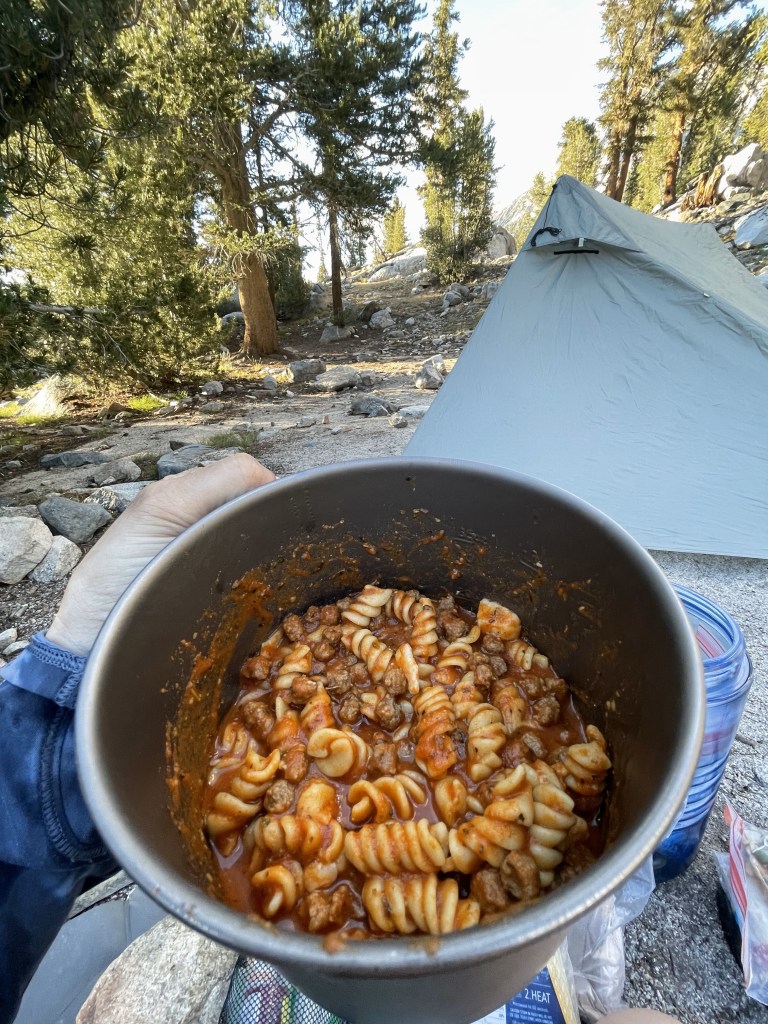
| Dinner | Self made freeze dried meal |
| Dessert | Fun size candy bar |
Both of us felt hungry about every two hours, and neither of us wanted to stop and prepare lunches so this meant we needed a lot of snacks, bars, and easy-to-prepare meals like tortillas with salami and cheese or peanut butter and jelly. It was very important to me that we had high quality bars and snacks. To save you the headache of researching ingredients, here’s a helpful list of “NTP-approved” items.
👌NTP-approved backpacker snacks, brands, and recipes
Criteria: Approved items are free of seed oils and crazy ingredients that I can’t pronounce. They are whole food with very minimal to no preservatives or sugars.
Bar brands:
Trail Mix – we ended up making our own by mixing items available in the bulk section of Sprouts grocery store.
Shelf-stable and quality cheese brands:
Jerky – Tillamook
Oatmeal – Generic grocery store brand instant plain oatmeal (you need plain, otherwise it will be full of sugar)
Protein powder:
- Ancient Nutrition Bone Broth protein powder
- Mike’s Mix Protein First Recovery Drink – This has a couple of less-than-ideal ingredients but it tastes delicious and is a great price. Every evening before we set up camp we would soak our aching feet in the nearest ice cold creek and enjoy one of these drinks. It was a delicious treat that I do think helped with our overall recovery.
Freeze-dried foods – we bought freeze-dried vegetables and meat from Amazon. The chicken and beef was a brand called Nutristore.
Miscellaneous
- Indian Milk & Honey single-serving ghee packets – for extra calories
- Chia Smash Superfood Jam Squeeze packets
- Helena Hummus – in hindsight, these were heavy and took up a lot of room. But the sure were yummy.
- Huma Chia energy Gel
- Fat Fuel Instant Coffee – so good on mornings before big climbs
- Olizzi Olive Oil packets – for extra calories
- Bulk Supplements coconut water powder – used this for additional electrolytes in our recovery drinks
- Nate’s Honey Minis – nice pick me up!
Dinner recipes we loved:
- The Yummy Life Curry Rice with Chicken
- The Yummy Life Chicken Alfredo
- The Yummy Life Thai Peanut Noodles with Chicken
- Andrew Skurka Beans & Rice w/ Fritos & Cheese
- Andrew Skurka Mushroom & Bacon Oat-sotto
- I made up a few recipes that were really good but I need to tweak them before publishing them – coming soon!
🙅♀️ Stuff we ate that I wouldn’t consider NTP-approved:
- No-stir peanut butter – this typically has palm or other seed oil added to it, though the Sprouts brand at least had sustainably sourced palm oil. We opted for no-stir because we did not want oil to get all over our stuff. This was a good decision that I do not regret!
- Mission brand tortillas – they held up, because of all the preservatives. 🤷♀️
- Fun size candy bars – No regrets, I looked forward to them everyday. I could have easily gotten a nice brand of dark chocolate but food costs were adding up.
- The quantity of protein powder or protein isolates was more than what I would consider a reasonable amount, and we were pretty gassy because of it. 😬 But it was a good way to maximize calories and protein without adding weight to our packs or space in our bear can.
Planning the food was a tedious task, but it’s one that I enjoyed because it aligns with my interests both as an NTP and as a project manager. Having the variety and quality on the trail definitely made a difference in how we felt.
If you need help planning food for your thru-hike, send me a DM on IG or email me at jamie@yourtravelingntp.com – I’m happy to help! For real!
The health benefits of a thru-hike
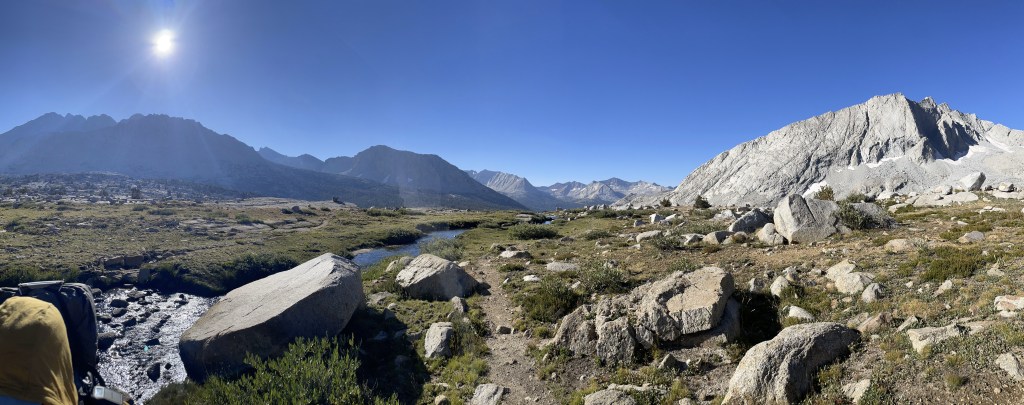
My intention for this hike was straightforward: I wanted to be outside, enveloped in nature, for 3-4 weeks. I’ve intuitively felt the benefits of being in nature. I’ve laid in the sun for five minutes and felt my nervous system reset. I’ve walked in the rain and felt gratitude swell up inside me. A perfectly timed breeze has taken me out of my worried, anxious mind and brought me to the present moment. I also spend a lot of time reading about holistic and quantum health and the benefits we experience via sunlight, circadian rhythms, and making direct contact with the Earth. All of these elements have a direct correlation to our overall well-being and I wanted to experience this firsthand and use that inspiration to propel my NTP practice forward.
🌎 Direct contact with the Earth’s raw elements aka “Earthing”
Anytime a piece of your body directly connects with the Earth, you are connecting to its electrical charge and gathering electrons. These electrons act as natural antioxidants. When electrons flow freely throughout the body, health improves on a cellular level. The Earth has a frequency and when we’re in contact, our bodies’ align to that frequency which brings resonance to our systems. This contact can regulate blood pressure, lower inflammation, lower cortisol, improve sleep, and more.
Traditional Chinese Medicine sometimes prescribes walking barefoot to stimulate the Qi (the flow of energy) throughout the body. In Japan, doctors recommend forest bathing, which is essentially a walk in the woods.
Here in the US, his practice has been called Earthing, but for some reason the term irks me. Even referring to it as a “practice” irks me. I find it silly to use a term to describe something we are meant to be doing and have been doing so naturally and without question for a long time, because as humans we intuitively understand that we are part of nature. Or, at least, we’re supposed to understand that fundamental truth. If you need studies and scientific research to “prove” this “theory”, you likely see yourself as separate from nature, in which case, I encourage you to go on a thru-hike. You need to reconnect.
My experience on the JMT aligns with what I’ve intuitively known and what research backs up: We feel shitty when we’re inside all the time. Living outside for 23 days felt surprisingly natural and despite challenging days hiking 11-15 miles over rocky terrain, I felt calm and for the lack of a better term, grounded. My energy levels felt consistent, my recovery was efficient, and though I wasn’t sleeping uninterrupted throughout the night, I felt rested. I don’t need a study to explain to me that spending time away from a city full of light pollution, noise pollution, air pollution, water pollution, and electromagnetic pollution is good for me. IMO, it’s a big, “duh!” But if that’s what you need, here are some studies and helpful articles for reference:
- Your Body is a Battery: How You’re Charged by Electrons – Article by Dr. Carrie Bennett
- The effects of grounding (earthing) on inflammation, the immune response, wound healing, and prevention and treatment of chronic inflammatory and autoimmune diseases – National Library of Medicine
- Earthing: health Implications of Reconnecting the Human Body to the Earth’s Surface Electrons – National Library of Medicine
☀️ Circadian Rhythm + Sunlight
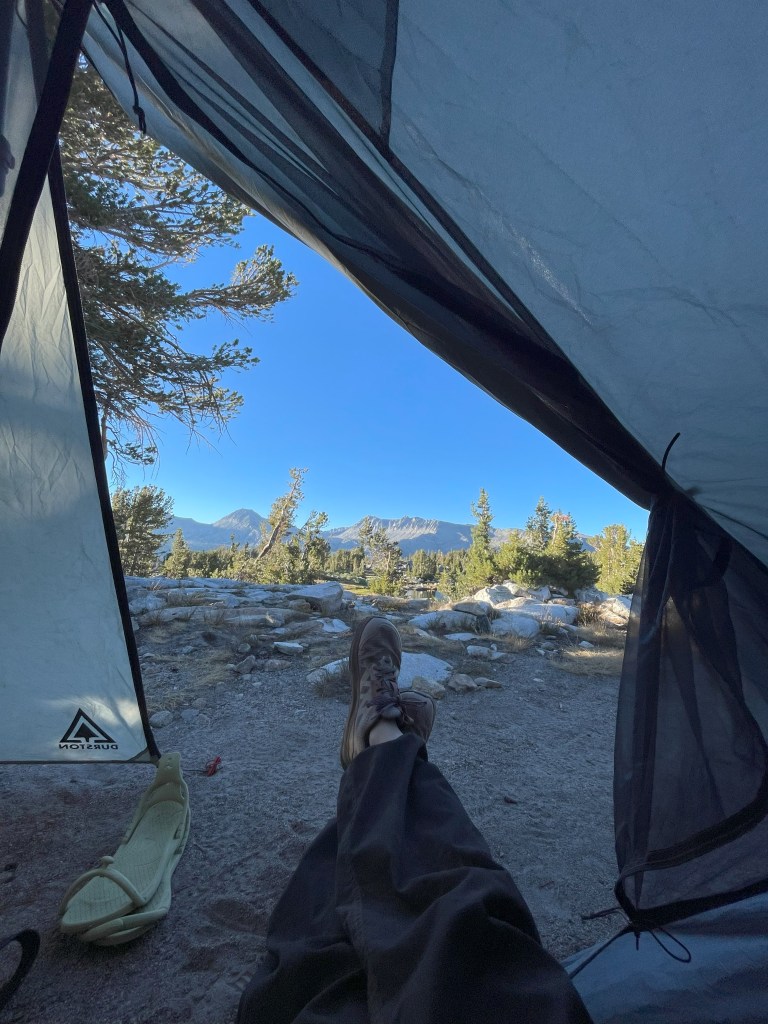
Something I noticed on the trail was how locked in we were to the sunrise and sunset each day. We were in our tent drifting off to sleep just after sunset (sometimes during), and we would naturally wake up at sunrise. It didn’t take any effort because we didn’t have any distractions – no TV, no internet, and no lights except for our headlamps, which we rarely used. This natural flow is what’s known as the circadian rhythm and it is a crucial and often overlooked key to our health.
Getting natural light around your eyeballs is one of the easiest ways to support your circadian rhythm. No, I’m not recommending that you stare at the sun at high noon. Being outside with the ability to get sun to your eyes (indirectly-even through trees or clouds) directly affects the circadian rhythm due to a cluster of cells in your hypothalamus known as the suprachiasmatic nucleus (SCN). The SCN takes in information about light/dark cycles and directly affects chemicals that control your sleep cycles, most notably melatonin. It’s important to note that this light needs to be unfiltered; light coming in through sunglasses or windows won’t have the same impact.
Having a healthy and consistent circadian rhythm makes everything about your body function better. I’m serious. Every system in our body is affected by this process. Hormones, metabolism, cognitive function, immune function, body temperature, stress response, digestion, and detox are all supported by your circadian rhythm.
All the time we spend looking at computers, our phones, TVs, or sitting inside disrupts our melatonin production, negatively impacting our circadian rhythm. Without screens to distract us and by getting so much natural light we got into the rhythm very quickly and despite having long, active days, we always felt rested and recovered.
Beyond its role in circadian rhythm, spending our entire day in natural light and hours in direct sunlight provided a long list of benefits as well. For me, the thing that stood out the most was probably digestion. Before the trip, I was concerned about trail food hitting my gut and causing indigestion, constipation, or diarrhea. No one wants diarrhea when they’re hiking up switchbacks! However, during the trip, things were running very smoothly in that area. 💩
Sunlight affects serotonin production and serotonin supports gut motility. Essentially, sunlight helps move things along. It’s actually the SCN that sends the signal to produce serotonin! The best light for this is UVA light which occurs just after sunrise. If you’re regularly constipated, get that morning light, I can assure you that it helps!
As we all know, the best source of Vitamin D is produced when we’re in the sun. Vitamin D further supports gut health by improving the microbiome, regulating inflammation, and keeping the gut lining healthy and intact.
🏔️ Pushing Your Boundaries for Mental Health
I saw this clip shortly after we returned from our trip and it really resonated with me. I’ve always been of the notion that we should regularly face our fears for self-growth, for the sake of adventure, and to live a “full life,” but the connection it has to our nervous system and mental health hadn’t really struck me until this clip. Especially fears or adventures that involve a connection to our natural world.
It is so easy to get wrapped up in your head when you spend most of your time in whatever safe bubble you’ve created for yourself. We all do this and we honestly should to an extent. We thrive when we are secure. However, staying snuggled in your security comes at the cost of anxiety sometimes. What will happen if I mess up this safety net? It’s literally our brain’s job to keep us safe and it will spin up some wild tales to keep you from venturing beyond whatever little slice of safety you’ve provided.
Anytime you overcome a physical challenge, you’re essentially training the nervous system to better handle stress. The booming wellness business and biohacker bros might have you believe that you need to pay for a cold plunge to do this, but any physical activity that’s outside of your comfort zone will accomplish the same thing. Any activity that requires you to calm yourself and breathe (Wim Hof, yoga, a strenuous hike, rock climbing, sitting still for five minutes, anything!) is building resilience.
The more you stretch beyond your comfort zone and safety net, the calmer you will be. You’re creating new brain cells and building neural connections, reducing anxiety and stress, and improving overall health.
If you’ve considered doing a thru-hike, I HIGHLY encourage you to follow through. I know it can seem overwhelming but just focus on the basics: Get your permit, prepare your body, plan your food, get your gear, and GET THERE!
While my feet did hurt for an entire month upon returning home, I still felt better on the mountain than in the city. It was a small price to pay and I’d happily beat the shit out of them again on another hike.
Resources
If you’re interested in hiking the JMT, here are some of the resources we used to plan our trip:
- https://www.shedreamsofalpine.com/blog/john-muir-trail
- https://www.shedreamsofalpine.com/blog/john-muir-trail-permits
- https://bearfoottheory.com/john-muir-transportation-information-planning-tips/
And seriously, if you have any questions just send me an email or DM me on IG. I would love to help and answer any questions!


 Your Traveling NTP
Leave a comment